
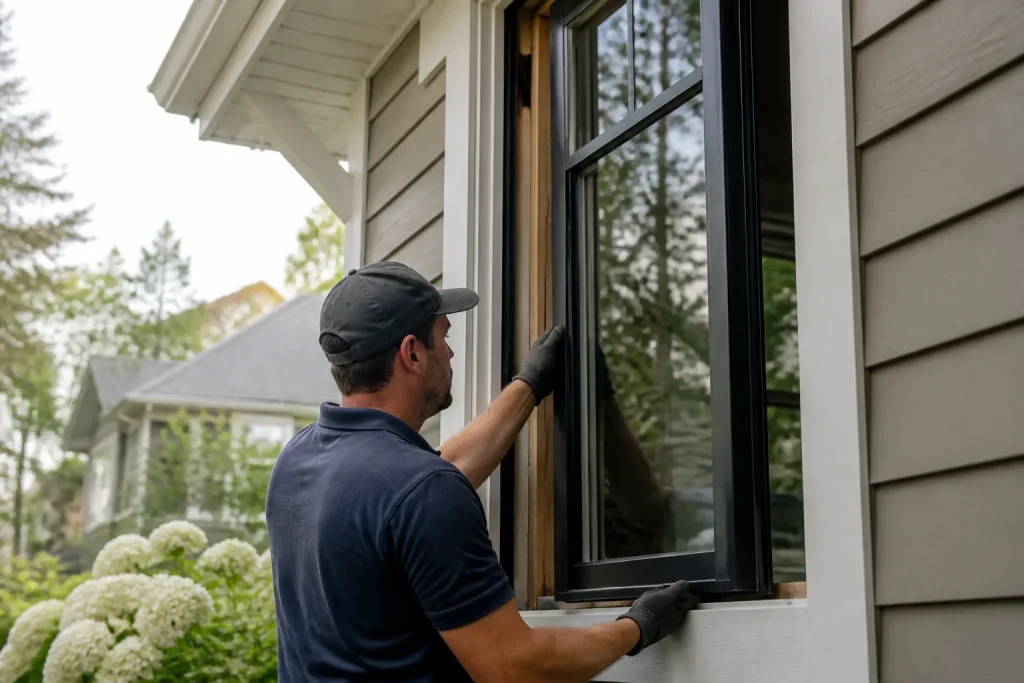
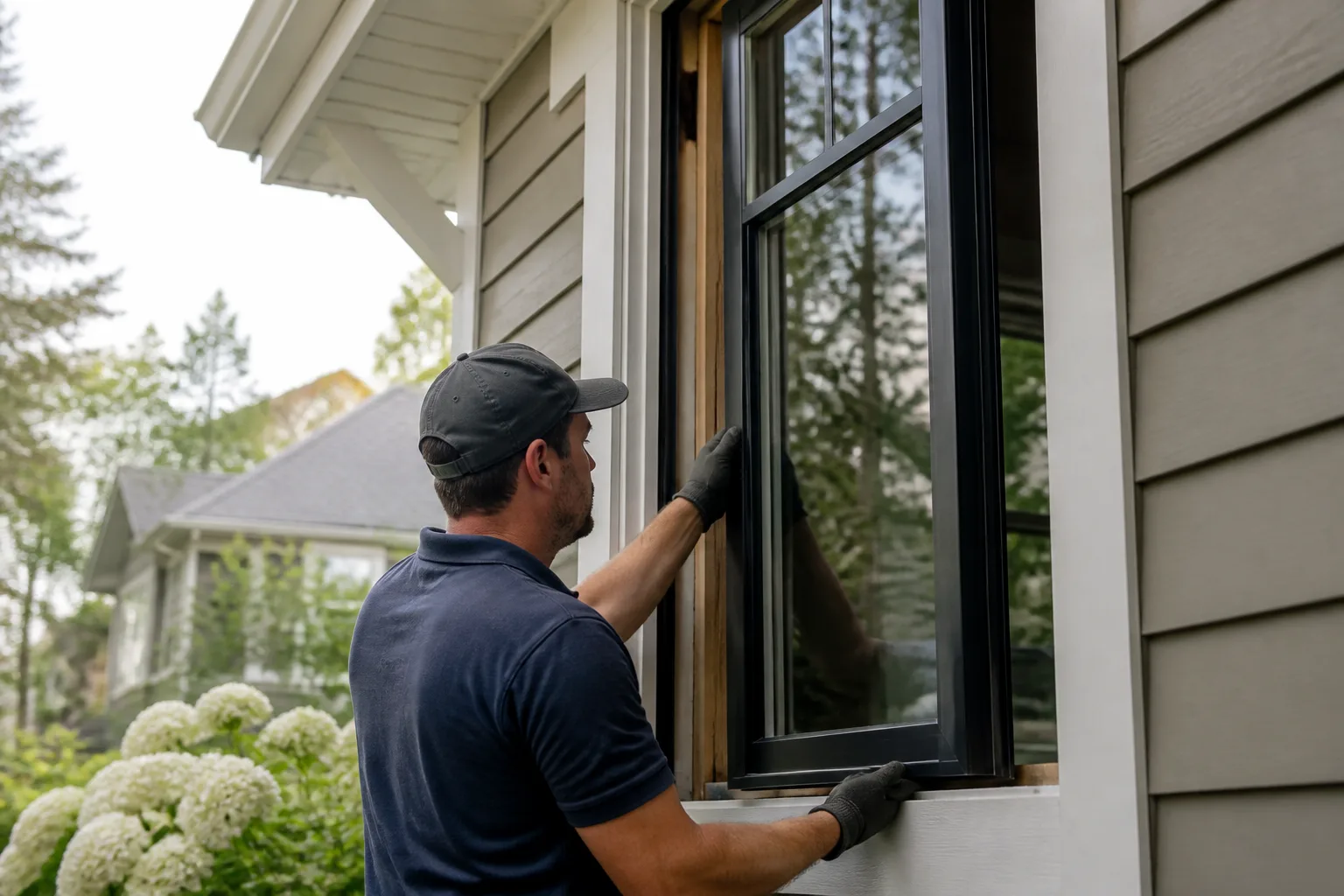
Andersen Window Installation in Columbus: A Homeowner’s Guide
Andersen makes nine distinct product lines, each with different frame materials, expansion rates, and flashing requirements, yet most installation quotes in Columbus treat them as interchangeable. A 100 Series window and a 400 Series window are not the same job. The Series you choose dictates the rough-opening tolerances your installer must hit, and most Columbus homeowners don’t find that out until the crew is already on-site.
If you’re comparing Andersen lines and want to understand what changes between them, this guide maps the mechanical differences to the installation variables that determine long-term performance. And if you’d rather just get a price and skip the homework, call (888) 635-0804.
Key Takeaways
- Andersen’s 100, 200, 400, and A-Series lines expand and contract at different rates, which changes the shimming plan, the flashing details, and the required clearances.
- Andersen has a two-layer warranty: the manufacturer coverage and the installer workmanship coverage. Both must be registered in writing or full protection lapses.
- Columbus’s temperature swing range, from sub-zero nights to humid 90-degree weeks, makes expansion gap placement the single most common installation error we see on Andersen windows.
- Skipping rough-opening prep steps, like checking for square and level before setting the frame, voids Andersen’s warranty before the window ever sees a winter.
Why Andersen Series Choice Changes the Installation, Not Just the Price
Andersen’s 100 Series uses Fibrex, a wood-polymer composite that expands less than vinyl but more than aluminum. The 200 Series is wood-clad with vinyl on the exterior. The 400 Series is wood on the interior with a vinyl or aluminum-clad exterior. The A-Series is wood throughout with a thicker aluminum cladding and higher structural load capacity.
Each material moves differently when Columbus swings from 5 degrees in February to 95 degrees in July. Fibrex frames want about 1/8 inch of expansion clearance on all sides. Solid wood 200 and 400 Series frames want slightly more, especially on south-facing walls where direct sun can push surface temperatures past 120 degrees.
When an installer shims a 400 Series window like it’s a 100 Series, the frame binds. The sashes get tight in summer, the seals flex, and frozen condensation shows up at the corners by the second or third winter. We’ve pulled more than a few mis-shimmed Andersen units out of garages over in Clintonville and Worthington where the homeowner was told “they all install the same.” They don’t. Check out our TruePane Windows & Doors home page to see how we approach Andersen work specifically.
What Andersen’s Two-Layer Warranty Actually Covers
Andersen’s warranty structure has two layers, and both matter. The first is the manufacturer’s coverage on the window itself: the glass unit, the frame, the hardware. The second is the installer’s workmanship warranty, which covers how the window was set, sealed, and flashed into the opening.
Here’s what most Columbus homeowners miss:
- The manufacturer layer only activates when the serial number is registered within the required window, typically 30 days from purchase.
- The installer layer only protects you if the contractor files their own paperwork and stands behind their labor with a written promise.
- If either registration is skipped, a failed glass seal or a leaking frame becomes a disputed claim between you, the dealer, and the manufacturer.
At TruePane, we call this The Keystone Standard: both warranty layers registered in writing, durations stated, before the truck leaves the driveway. That practice came out of seeing too many Columbus homeowners holding a voided claim because a subcontractor never filed the second layer. You shouldn’t have to call around and beg for a warranty number.
The Rough-Opening Prep Steps That Void Andersen Warranties When Skipped
Every Andersen installation manual lists prep steps that are measured, not optional. Most of them live in the rough opening before the window ever arrives. A crew that skips them can still make the trim look clean, but the window is already failing behind the trim.
The critical prep checks are:
- Square check. The rough opening’s diagonal measurements must be within 1/8 inch of each other. More than that and the frame gets twisted into place, which stresses the glass and the seals.
- Level check. The sill must be level within 1/16 inch across the full width. A low corner collects water and freezes the frame in winter.
- Plane check. The opening’s four corners must sit in the same vertical plane. A bowed stud gets shaved or the window bows with it.
- Moisture check. The framing around the opening must read under 19% moisture on a meter. Setting a window into wet wood is a warranty void and a mold invitation.
- Flashing pan check. A sill flashing pan must be installed, sloped, and taped before the frame goes in. Skipping the pan is the number one cause of concealed drywall damage we find behind older installs in Columbus’s Eastmoor and Berwick neighborhoods.
Ask any contractor bidding your Andersen work this: “Will you write the square, level, and moisture readings on the contract before the frame goes in?” If they squint at you, that’s an answer.
Columbus Temperature Swings and Andersen Expansion Gaps
Columbus sits in a climate band where the temperature can move 40 degrees inside a single week. Fall and spring are the worst for it: one week the frame is chattering at 28 degrees, the next it’s baking at 78. Andersen frames are engineered for this, but only when the expansion gaps are placed per the manufacturer’s install guide for your specific Series.
Here’s what happens when the gaps are wrong:
- Too tight: The frame compresses against the rough opening studs on hot days, bows at the corners, and pinches the sashes. The operator gears wear out early.
- Too loose: The gap gets overstuffed with shims in the wrong places, the frame can rock, and the exterior flashing separates from the casing.
- Wrong sealant: Using a rigid caulk instead of an elastomeric sealant on the exterior perimeter means the seal splits when the frame moves, and water follows it inside.
Sealed units, the insulated glass assemblies inside Andersen sashes, take the worst of the damage. When the frame can’t move, the stress transfers into the sealant bond between the glass and the spacer. A blown seal fogs the glass in year two or three, and many Columbus homeowners think it’s a manufacturing defect. Frequently it’s not. It’s a gap that was never there to begin with.
Questions to Ask Before Signing an Andersen Installation Contract
Any contractor with a distributor account can sell you Andersen windows. Fewer can install them to the tolerances Andersen’s own install guide requires. In Columbus, where a century-old double-hung is just as common as a 1990s vinyl insert, the right questions separate craftsmen from order-takers.
Ask these directly:
- “Which Series are you recommending, and why that one over the others for my house?” A knowledgeable installer should be able to explain the difference between a Fibrex 100 and a wood 400 for your specific elevation and shading.
- “What are your rough-opening tolerances?” Listen for numbers: 1/16 inch on level, 1/8 inch on square, 19% moisture maximum. No numbers means no procedure.
- “Who files the manufacturer registration, and when?” The registration should happen before the final walkthrough, not when the invoice is due.
- “What’s your labor warranty in writing, and what does it cover if the seal fails in year three?” Get the duration and the process on the contract.
- “Have you installed Andersen in my neighborhood?” A crew that knows German Village’s dense brick openings or Dublin’s newer vinyl-sided frames has already learned lessons on your kind of house.
We’ve found that homeowners who ask these five questions end up with better installs, regardless of who does the work. The questions themselves clear out the bad bids.
Andersen vs. Other Columbus Window Options
Andersen is a strong choice for Columbus homes, but it’s not the only line worth looking at. Pella offers comparable wood and composite lines with different hardware profiles. ECO Window Systems and ViewLux lean toward the impact-rated and laminated glass side, which matters on Cambridge and Granville streets where hailstorms show up every few springs. A legit installer should be able to quote Andersen side by side against one or two alternatives on paper, with the frame materials, glass packages, and U-factors listed in separate columns.
We hold authorizations for more than a dozen manufacturer lines, including Andersen, Pella, Marvin, Milgard, Jeld-Wen, PGT, CGI, and ES Windows. That’s not a brag. It’s the only honest way to help a homeowner compare what they’re actually buying. If you want a closer look at how we handle the full installation process in the area, our Window Installation in Parkway page walks through the same prep and finishing steps we apply to every Andersen job.
The Bottom Line
Andersen windows are a solid investment for Columbus homes, but the window is only half the decision. The Series dictates the tolerances, the flashing, and the expansion gaps. The installer dictates whether those tolerances are actually hit. A good Andersen window installed poorly is just a future warranty dispute with extra steps.
We’re Dale Kessler’s crew at TruePane Windows & Doors, and we’ve been setting windows in Columbus since 2008, building on more than 42 years of glazing craft in the family. When we install Andersen, every opening gets measured twice, every reading gets written down, and both warranty layers get registered before the truck leaves. If you’re in Columbus and want an honest estimate on Andersen or any other window line, call us at (888) 635-0804. Estimates are free, and a real person answers.
If you’re also thinking about doors or a full replacement project, see our Door Installation in Parkway and Window Replacement in Parkway pages to understand the scope.
Frequently Asked Questions
Andersen installation in Columbus typically ranges from $700 to $1,400 per window for the 100 and 200 Series depending on size and opening condition, and $900 to $2,000 for 400 Series or A-Series wood windows. The spread comes down to rough-opening prep, interior trim work, and whether the install includes exterior casing or just an insert. Call (888) 635-0804 for a line-item estimate on your specific windows.
Sealed unit failures and binding sashes often trace back to undersized expansion gaps, especially on south-facing walls in Columbus. The failure usually shows up in the second or third year, not right away. That’s why TruePane writes the gap measurements into the install notes and registers both warranty layers before we leave.
Yes. TruePane offers a permanent 5% discount for seniors and veterans, along with $50 off any repair over $250 and an $89 seasonal tune-up. These offers apply to service work, not just full installations. Mention it when you call for the estimate.
Yes, but the opening has to be corrected before the frame goes in. Older Columbus homes, particularly in Clintonville, Victorian Village, and the Short North, often have settled framing that’s 1/4 inch or more out of square. We correct the framing, shim to Andersen’s specified tolerances, and flash the opening properly before setting the window. The correction work is part of the estimate, not a surprise line item later.
Written by Dale Kessler, Owner at TruePane Windows & Doors, serving Columbus since 2008.
Need Windows & Doors Help?
Call TruePane Windows & Doors - licensed & insured, here with fast after-hours help in Columbus.
(888) 635-0804