
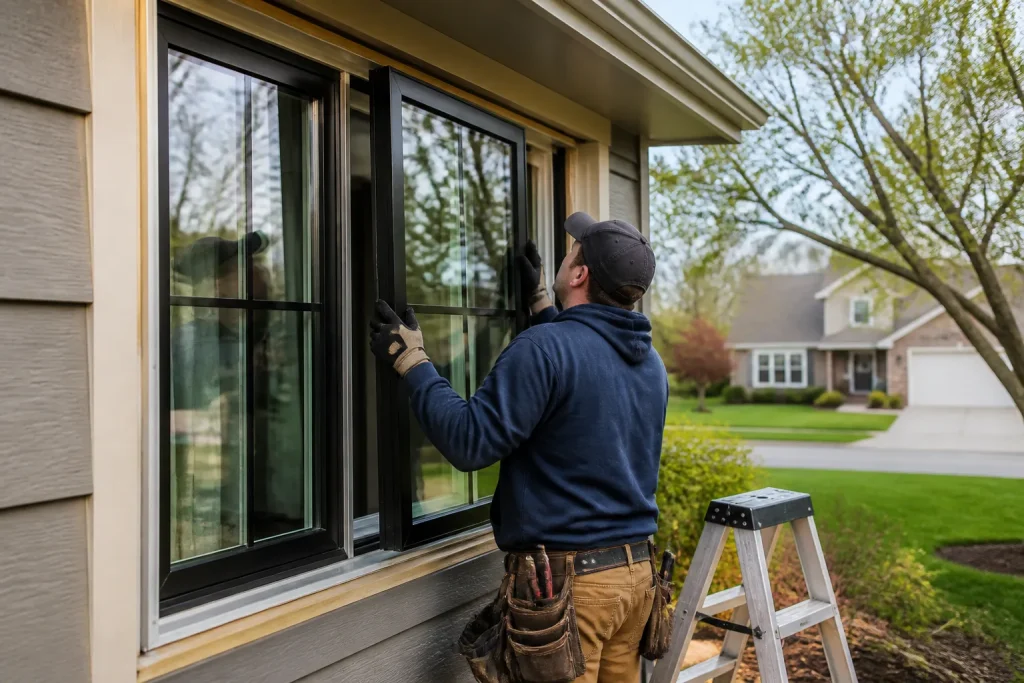
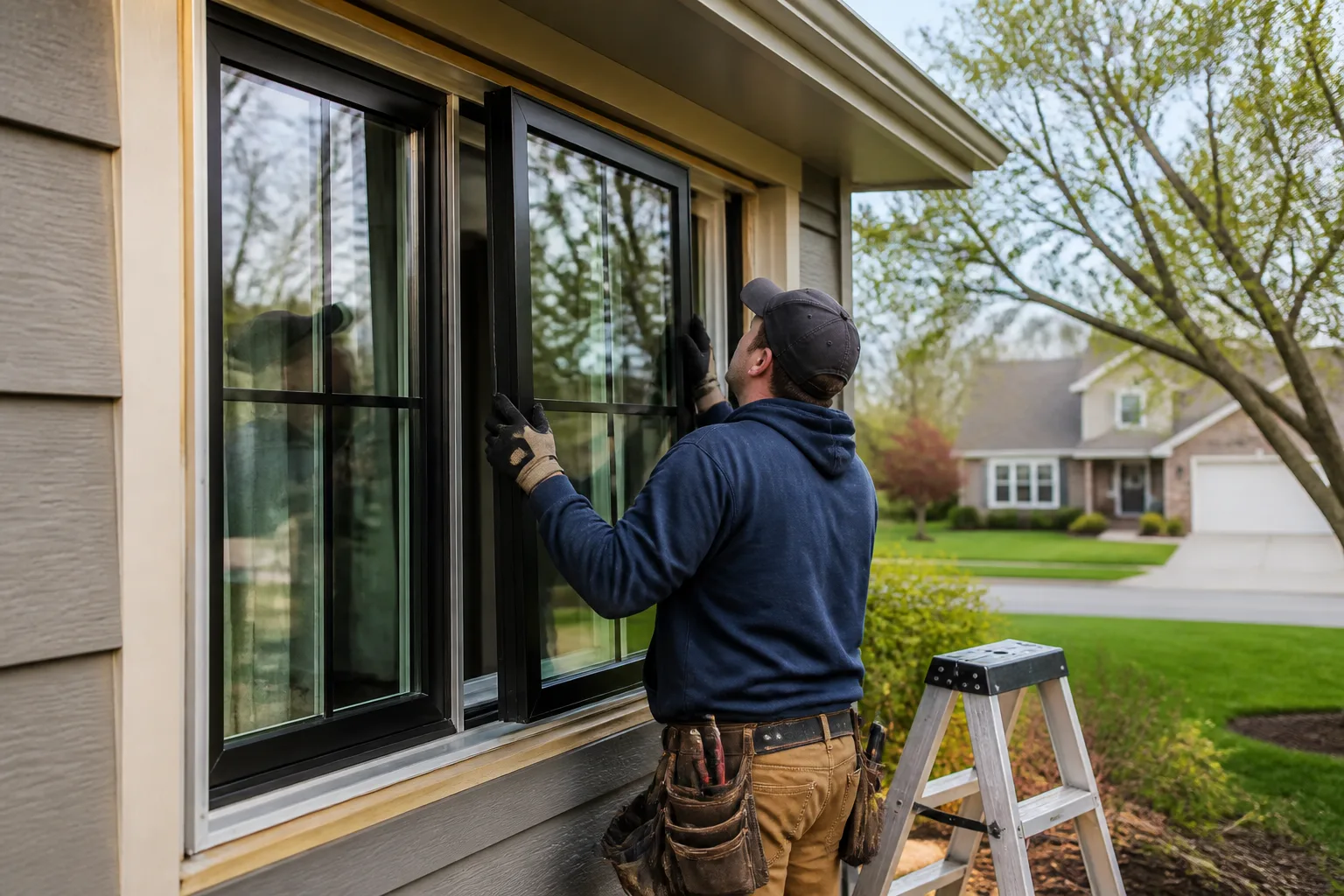
Pella Window Installation in Columbus: A Homeowner’s Guide
Pella sells windows in three distinct series that use different frame materials, thermal strategies, and flashing compatibility requirements, yet the majority of Columbus installation crews use one standard process across all of them. Put a wood-frame Pella Reserve window in with the same shimming tolerances you’d use for an Impervia fiberglass unit and you’ll have a frame that binds by February or a seal that lets go after two freeze-thaw cycles. This guide explains what separates the tiers, what Pella’s warranty actually demands from your installer, and what to check before you sign the completion paperwork. If you’d rather not sort through it yourself, call (888) 635-0804 and we’ll walk you through it.
Key Takeaways
- Pella’s three main series (150/250, Reserve, Impervia) use different frame materials that require different installation tolerances.
- Pella’s warranty is only as good as the installation behind it, and the company requires specific flashing and shimming conditions that many Columbus crews ignore.
- Columbus’s freeze-thaw cycle expands and contracts each frame material at a different rate, so gap tolerances set in July will not hold in January if they were wrong from the start.
- You should have a written, Pella-specific installation checklist in hand before the crew arrives, and you should walk the job before signing off.
How Much Does Pella Window Installation Cost in Columbus?
You’ll see a wide range for Pella window installation in Columbus because the three product tiers land in different price brackets. For a standard double-hung replacement, a Pella 150 Series vinyl window typically runs $450 to $750 per window installed. Step up to the Pella 250 Series with its enhanced glass options and better thermal numbers and you’re looking at $600 to $1,000 installed. The Reserve Series, which is Pella’s wood and clad-wood line, usually starts around $900 to $1,400 per window for replacement work, and a Reserve in a custom size or with divided lites can push past $1,800. Impervia, the fiberglass line, lands between the 250 and Reserve at roughly $1,000 to $1,600 installed. These are installed prices from Columbus-area window companies we talk to regularly, and they assume a standard opening with no rot repair.
The reason you see a four-figure swing from one Columbus contractor to the next is usually not the window itself. The window cost from the manufacturer supply house is fairly consistent across the city. What changes is how the installer prices the labor, whether they plan to do a proper flash-and-seal replacement or quick pocket change, and whether they intend to register the warranty. Some low bids in Columbus skip the new-construction flashing details on a replacement job because it is faster, and the homeowner has no way to know until the drywall starts staining three springs later. A cheaper installed price from one TruePane customer’s estimate we reviewed in Westerville came in $1,100 lower than ours because the other contractor planned to reuse the old aluminum flashing on a new-construction Pella unit. The old flashing was 22 years old. That is not a savings. That is a buried problem.
Pella’s Three Product Tiers, Explained Plain
Pella organizes its residential window line into three series, and the structural differences between them are not cosmetic. The 150 and 250 Series use vinyl frames. Vinyl expands and contracts more than any other common window frame material, which means Pella specifies a wider shimming tolerance and a backer rod detail on the interior side so the frame can move without cracking the caulk joint. The Reserve Series uses wood with an aluminum cladding on the exterior. Wood is the most stable of the three materials in terms of thermal movement, but it needs a drainage plane behind the cladding and cannot be shimmed tight against a rough opening that is out of square. The Impervia line uses a fiberglass composite that expands and contracts at a rate very close to glass itself, which is why Pella can spec a much tighter installation tolerance than on vinyl, but fiberglass cannot be shimmed in the same locations as wood without crushing the frame corners.
Here is the part that matters for Columbus homeowners. A crew that knows Andersen’s wood window details cold does not automatically know Pella. A crew that has done a hundred Pella 150 installs in new subdivisions around New Albany may have never touched an Impervia. The shimming points, the caulk type, and the perimeter seal details all change between tiers. In our experience walking behind other installs in Columbus, we regularly see vinyl-rated caulk used on Impervia frames, which is the wrong material and fails at the joint. We see Reserve windows shimmed like vinyl units with no room for wood to breathe behind the cladding. The window still looks fine from four feet away. That’s the problem. You won’t know until the weather works on it.
What Pella’s Warranty Actually Requires From Your Installer
Most Columbus homeowners read the Pella warranty as a promise that covers the glass and frame. That part is true, but the full contract language places installation requirements on the contractor, and if the contractor skips them, the warranty claim gets denied. Pella’s published installation instructions, which the company references in its warranty documentation, require specific flashing tape grades, specific sill pan designs, and a minimum shim spacing and placement. If a Pella technician examines a failed unit and finds the installer used the wrong flashing sequence or set the wrong corner shims, that failure is classified as installation error, not a manufacturer defect. You as the homeowner did nothing wrong, and you still eat the replacement.
The practical way to protect yourself is to ask your installer to state in writing that they install to Pella’s published installation instructions for the specific series you are buying, not just “professional installation standards.” Professional standards means whatever the crew boss remembered from the last job. Pella’s instructions are free to download, and they are different for the 150 Series than for Impervia. A written acknowledgment of the specific document creates the paper trail you need if the unit fails. The Keystone Standard at TruePane exists for exactly this reason, both manufacturer warranty layers get registered in writing before the truck leaves your driveway, and the crew works to the manufacturer’s own installed specifications, not a generic trade assumption.
Flashing Sequences: New Construction vs. Replacement
Pella’s flashing diagrams differ depending on whether the opening has never held a window or already has one. For new construction in neighborhoods like Harrison West or Italian Village where older homes get full frame replacements, Pella calls for a specific sill pan at the bottom of the opening, a 45-degree lapped flashing sequence at the jambs, and a head flashing that directs water out over the face of the window and away from the sheathing. For a pocket replacement where the old frame stays in place, Pella’s literature reduces the sill pan requirement and leans on the existing frame’s drainage, but it still calls for backer rod and a continuous sealant bead at the interior.
What we see in Columbus, and what you should watch for, is the mixing of the two sequences on one job. A crew that mostly does new construction in the suburban developments around Lewis Center will arrive at a 1930s Clintonville house and use the new-construction flashing method on a pocket replacement, creating an extra layer of flashing that traps condensation behind the frame. Or the reverse, a replacement-focused crew in Victorian Village will skip the sill pan on a full frame tear-out because they are used to keeping the old frame. The window goes in, the wall stays dry for two years, and then the bottom of the rough opening rots out. By the time you see the stain on the interior sill, the repair is twice the cost of the original install. Ask your installer which sequence they’re using and why, and put the answer in the estimate.
Columbus Freeze-Thaw and Gap Tolerances by Series
Columbus gets maybe 90 freeze-thaw cycles in a typical winter, where the temperature crosses 32 degrees during the day and drops below it at night. Each cycle moves the window frame, and each series moves a different amount. Vinyl moves the most, enough that a too-tight perimeter seal will tear within a season or two. Wood moves the least, but when wood is clad in aluminum, the two materials move at different rates and a tight shim point can cause the cladding to buckle at the corners. Fiberglass moves almost nothing, which sounds like the easy answer, except that a fiberglass frame in a rough opening that is out of square by half an inch will not flex to close the gap. It holds its shape and the installer either forces it, which cracks the frame at the weld, or shims it in a way Pella’s instructions do not allow, which voids the warranty.
The right tolerance changes based on the season of install and the series. A vinyl frame installed in July when the vinyl is warm and expanded needs a slightly larger perimeter gap than the same frame installed in January when the vinyl has contracted. A good Columbus installer accounts for the install temperature. Most simply shim it to look square, caulk it, and drive to the next job. When you are looking at quotes, ask this one question: “What gap tolerance are you setting at the head and sill for this series?” If the answer is a blank look, you are talking to the wrong crew. If the answer has a number in it and a reason for the number, you’ve found the person who reads the manufacturer’s book.
A Pella-Specific Installation Checklist for the Post-Install Walkthrough
Before the crew cleans up and you sign the completion paperwork, walk the job with a copy of Pella’s installation instructions for your series and check the following points. This is not a cosmetic walkthrough. This is the check on the details that determine whether the window lasts ten years or thirty.
- Sill pan: For any full-frame replacement or new construction, there must be a sill pan flashing at the base of the opening, sloped to drain outward. If you look from inside and see bare wood frame at the bottom, the pan is missing or hidden under the sill in a way that defeats its purpose.
- Shim count and placement: Pella’s drawings show shims at specific points, typically the corners and at the midpoint on wide windows. If you see shims stacked three or four deep in a corner, the rough opening was too big and someone is filling space rather than squaring the frame.
- Perimeter seal: The caulk joint should be clean, continuous, and the right product. For a wood Reserve window, it should be a marine-grade sealant compatible with the cladding. For vinyl, a low-modulus sealant that moves with the frame. If you see gaps or a caulk line that looks thin and stretched, flag it now.
- Operation check: Open and close every sash before the crew leaves. A Pella window that binds when new will only get worse as the frame settles. This is the simplest test and the one most homeowners skip because they assume the installer checked it. Check it yourself.
- Warranty registration: Before you sign the completion form, ask for written confirmation that the warranty has been registered with Pella. If the installer says they’ll do it later, get that in writing on the invoice or the estimate. In our experience, “later” never happens once the truck is out of the driveway.
When to call a pro: Pella’s instructions assume the rough opening is within a specific tolerance for squareness and size. A 30-year-old Columbus house rarely has a wall that matches those drawings. If the opening is out of square by more than an eighth inch across the frame, or if there is any sign of water staining or rot at the sill, stop and call someone who has corrected these conditions before. That is the moment a DIY repair or a cut-rate bid turns into a wall repair that costs five times the window. The Keystone Standard exists because we have spent 42 years in Columbus homes fixing the results of installs that should never have been done the way they were. We will tell you if the opening needs work before a window goes in, not after the stain shows up.
Related services in Columbus
If your Pella project turns up a rotted opening, a door that binds, or a full-house replacement scope, we do more than window installations. We handle Window Replacement in Parkway for homeowners dealing with older frames and failed seals, and Window Installation in Parkway for full-frame new work. If the project includes a patio door or entry door, see our Door Installation in Parkway page for the same attention to the manufacturer’s own installation standards. And for the broader picture of how we work, visit the TruePane Windows & Doors home page. We are a Columbus company, not a call center with a local phone number forwarding to a national dispatch desk.
What happens when you call
- 1
A real person answersNo phone trees - you reach a local pro.
- 2
You get an upfront price rangeHonest numbers before anyone is dispatched.
- 3
A background-checked tech heads outLicensed & insured, dispatched right away.
- 4
You approve before work beginsNothing starts until you say go.
The Bottom Line
Pella makes a good window, but the window is only half of what you are paying for. The other half is the installation, and Pella’s own literature is clear that the installation details change by series and by installation type. A Columbus homeowner who pays for a Pella Reserve installed with vinyl-grade flashing and generic shimming has not bought a premium window. They have bought a premium window with a discount installation, and the wall will eventually send them the bill for the difference. Get the series-specific installation requirements in writing, confirm the warranty registration before signing, and walk the job before the crew leaves. If you are in Columbus and want a second set of eyes on an estimate or a fresh install, TruePane Windows & Doors offers free estimates. Call (888) 635-0804 and we’ll take a look.
Frequently Asked Questions
A Pella window installation in Columbus typically ranges from $450 to $1,600 per window installed, depending on the series. The 150 Series vinyl line runs roughly $450 to $750 per window, the 250 Series $600 to $1,000, and the Reserve wood line $900 to $1,600 for standard sizes. High-end custom units push beyond that. The spread between Columbus contractors reflects the installation method more than the window price. Call (888) 635-0804 for an exact quote on your specific windows, the estimates are free.
The 150 and 250 Series use vinyl frames, with the 250 adding upgraded glass packages and better thermal performance. The Reserve Series is wood with aluminum cladding, built for traditional architecture and the most stable frame of the group. The Impervia Series is fiberglass composite, which expands and contracts at nearly the same rate as glass. Each series requires different installation tolerances, shimming points, and flashing details, which is why a one-size-fits-all install method causes premature failures. We see this in Columbus regularly.
No. Pella’s warranty covers manufacturer defects in the glass and frame. Installation errors, such as improper flashing, incorrect shimming, or the wrong perimeter sealant, void the coverage on the affected unit. Pella’s warranty documentation requires the installer to meet the company’s published installation standards, and failure to do so shifts the cost to the homeowner. Ask your installer to state in writing that they follow Pella’s own installation instructions for your specific series before work starts.
Yes, and in many cases a winter install is better for gap tolerance settings. The frame material is already contracted, so the perimeter gap set on a cold January day will hold correctly when the material expands in the summer. The reverse is not true, a vinyl frame installed on a hot July day without accounting for the expansion will bind or tear the caulk joint by February. Any good Columbus installer adjusts the tolerance for installation temperature and the series being installed. Call (888) 635-0804 if you want the details for your specific home.
Written by Dale Kessler, Owner at TruePane Windows & Doors, serving Columbus since 2008.
Need Windows & Doors Help?
Call TruePane Windows & Doors - licensed & insured, here with fast after-hours help in Columbus.
(888) 635-0804