
Top Signs You Need Windows & Doors Service - Don’t Ignore These
Most of the signs that Columbus homeowners notice - a stiff door, a foggy corner on a pane, a draft they blame on weather stripping - are symptoms, not the problem itself. Treating the symptom extends the timeline before a more expensive repair becomes unavoidable. This piece identifies what each common sign actually indicates structurally and what the correct next step is. If you’d rather not diagnose it yourself, call (888) 635-0804 and we’ll walk you through what you’re seeing.
Condensation between window panes is not a sign that you need new windows. It is a sign that the sealed unit has failed, which is a different scope of work with a different cost. The distinction matters before you accept any quote, because a contractor who sells you a full replacement when only the insulated glass unit needs swapping is not doing you any favors.
Key Takeaways
- Fogging between panes means a failed sealed unit, not necessarily a failed window.
- A door that binds in July and swings loose in January is telling you something about the frame or the foundation, not just the hinges.
- Drafts come from two different sources: failed weatherstripping (cheap fix) or improper original installation (not a cheap fix).
- Interior condensation patterns can tell you whether you have a glazing failure or an insulation deficiency.
- Some signs warrant a same-week service call. Others can wait for a scheduled consultation.
The Failed Sealed Unit vs. the Failed Sash vs. the Failed Frame
These three problems look nearly identical from inside a room, but they have different repair scopes and different price tags. Knowing which one you have before you call a contractor puts you in a better position to evaluate the quote.
A failed sealed unit shows up as fog or condensation you cannot wipe away, because it is trapped between the two panes of glass. The fix is replacing the insulated glass unit itself, often called an IGU. The sash and frame stay in place. This is the least invasive repair and the most common window issue we see in Columbus, especially in homes built during the 1990s housing boom when a lot of double-pane units went in and have now reached the end of their expected service life.
A failed sash means the operable part of the window - the piece that holds the glass and slides or swings - has warped, cracked, or stopped seating properly. You might notice the window will not stay up, or it rattles in the wind, or the lock no longer lines up. Fixing this typically means replacing the sash and rebalancing the hardware.
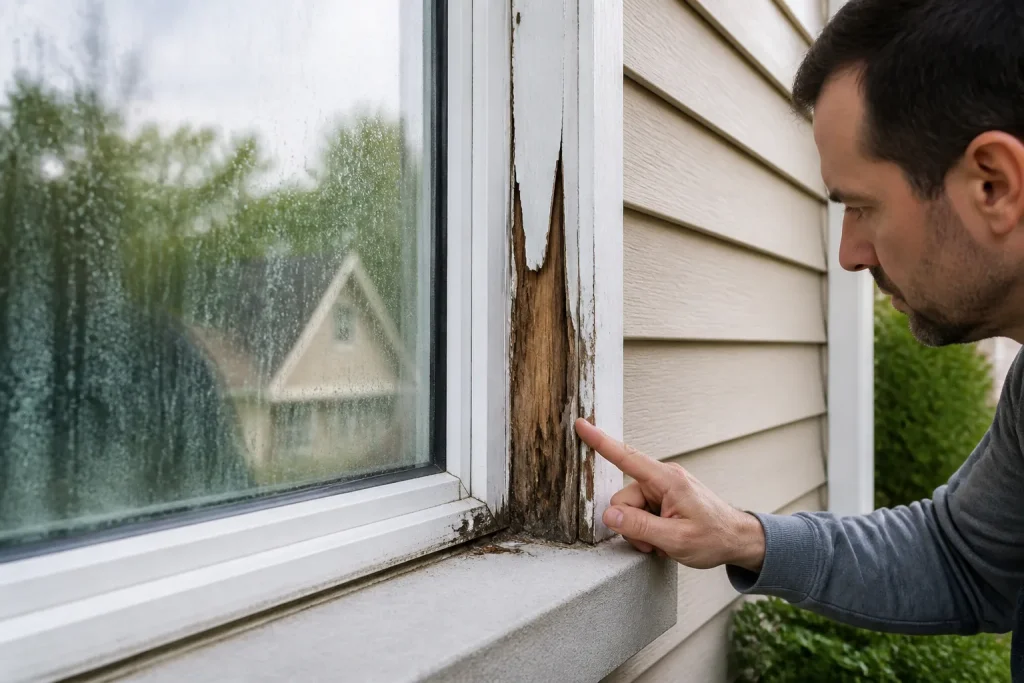
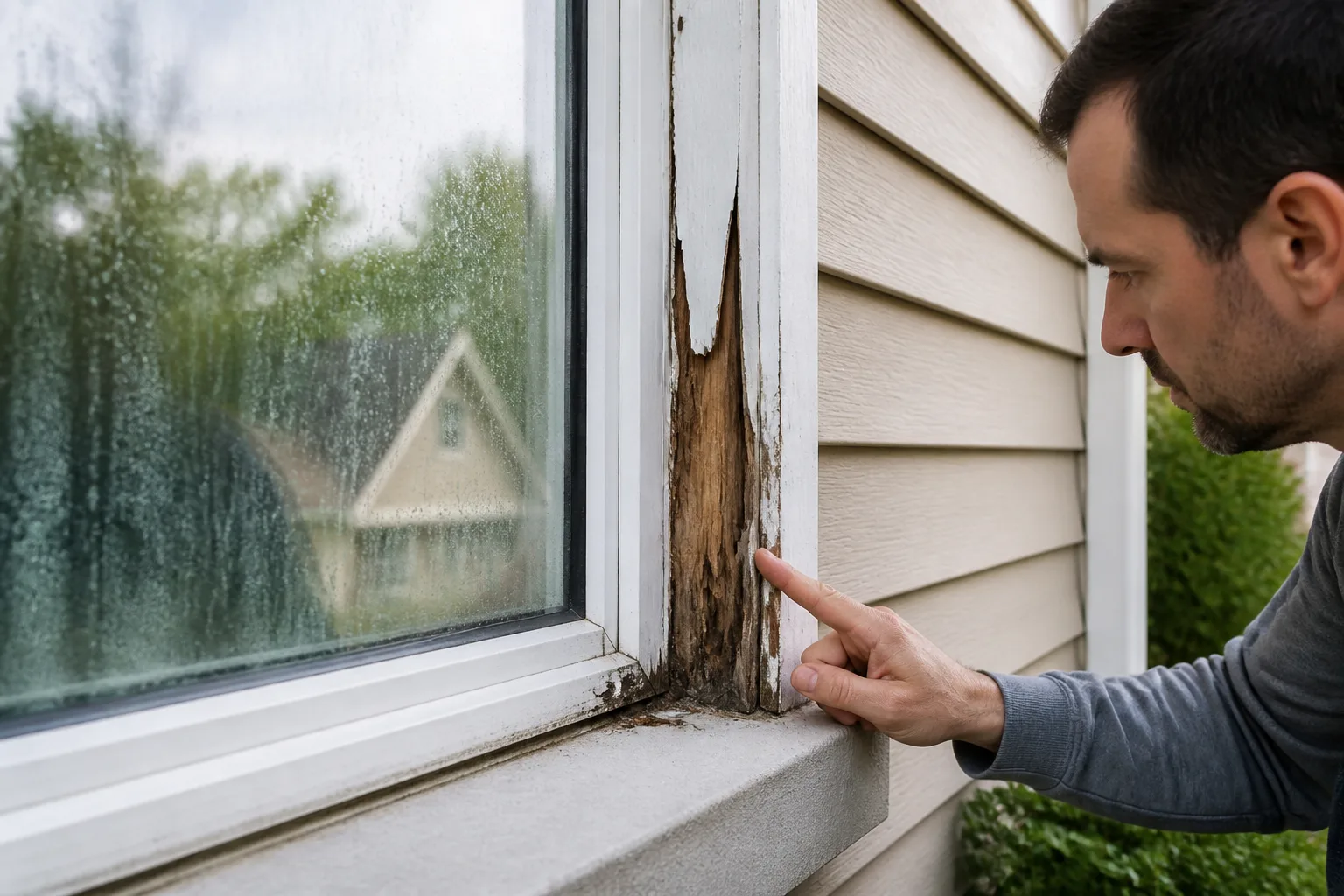
A failed frame is the most serious of the three. Rotted wood around the perimeter, gaps between the frame and the wall, or visible water staining on the interior drywall below the window all point to the frame itself. In Columbus, where freeze-thaw cycles push moisture into any crack it can find, a failed frame left alone for two or three winters becomes a wall repair, not just a window repair.
If you are not sure which failure you are looking at, do not guess. A written quote should state exactly what is being replaced and why. We quote manufacturer lines side by side on paper for this reason - so the homeowner sees what they are buying and what problem it solves. The TruePane Windows & Doors home team sees all three failures weekly across the Columbus area.
What a Stiff Door Actually Tells You
A door that binds at the top corner in July and swings free in January is not a hardware problem. Wood expands in humidity and contracts in dry winter air. If the door slab was installed with proper clearance, that movement stays within the gap and you never notice it. If the door binds, the clearance was either too tight from the start or the frame has moved since.
Frame movement has two common causes in Columbus. The first is foundation settlement, which is common in older neighborhoods with clay soil that swells when wet and shrinks when dry. The second is frame settlement within the rough opening - the builder shimmed the door, the shims compressed or shifted, and now the door is racked.
Here is the practical difference. If the door binds only in humid weeks and operates fine the rest of the year, you are probably dealing with clearance that was cut too tight from day one. The fix is planing the door edge or adjusting the frame - a service call, not a replacement. If the door has shifted permanently, with gaps at the top corner and a tight bottom corner in all weather, the frame itself has moved. That requires removing the casing, re-shimming the frame, and re-hanging the door.
We pulled one out of a garage over in Upper Arlington last month where the homeowner had been sanding the top edge every summer for eight years. The door had almost no slab left. The real problem was two missing shims behind the hinge jamb. Forty minutes and the door swung true for the first time since they bought the house.
This is also where foundation movement starts costing real money if ignored. A door that binds because the foundation settled is a warning that other openings may be moving too. The Door Installation in Parkway service area covers exactly this kind of frame-level work, and it is worth having a professional look before you start sanding.
Drafts: Weatherstripping Failure vs. Installation Failure
A draft along the bottom of a door or the meeting rail of a window has two possible causes. The first is failed weatherstripping, which is a wear item like brake pads. It compresses, cracks, and loses its memory over five to ten years. The fix is a strip replacement, and yes, sometimes a $12 foam strip from the hardware store solves it. The second cause is improper original installation, and that one cannot be fixed with anything you buy off a shelf.
Here is how to tell the difference in under five minutes. Close the window or door and hold a strip of tissue paper at the suspect seam on a windy day. If the tissue flutters but the gap looks even and the weatherstripping is visibly compressed flat or cracked, replace the stripping. If the gap itself is uneven - wider at one corner than the other, or the sash sits visibly out of parallel with the frame - the unit was set out of true. No amount of stripping will fix a window that was racked when it was installed.
Improper original installation shows up in other ways too. You might find daylight visible around the door slab at one corner. You might notice the window locks require force to latch because the sashes do not meet in the middle. You might feel air movement even when the weatherstripping looks brand new. These are symptoms of an out-of-true installation, and the only correct fix is removing and resetting the unit.
In our experience across Columbus, homes built during the early 2000s are the most likely to have out-of-true installations. The volume of construction meant crews moved fast, and a window set 3/16″ out of square passes inspection but leaks air for the next twenty years. The founder of TruePane keeps a simple rule on the whiteboard: if the pane is not true, the job is not done. That standard applies whether we installed the window or someone else did, and if you are dealing with a draft that will not quit, it is worth having a Window Installation in Parkway professional put eyes on the opening.
What Interior Condensation Patterns Reveal
Condensation on the inside of a window is not automatically a window problem. It can indicate an insulation deficiency, a glazing failure, or simply high indoor humidity - and the pattern tells you which.
Condensation on the room-side glass surface is usually a humidity issue. Cold exterior temperatures meet warm, moist interior air, and water collects on the glass. If it forms on every window in the house, especially the bedrooms and bathrooms, the problem is indoor moisture. The fix is ventilation, not window replacement. Run the bath fan longer, check the dryer vent, and if the home has a whole-house humidifier, turn it down for the winter. Columbus winters with temperatures in the teens and twenties make this pattern common in homes with poor air exchange.
Condensation between the panes is the failed sealed unit we covered earlier. The IGU has lost its gas fill and the desiccant inside the spacer is saturated. You cannot wipe it away and it will not dry out. This is a glass replacement job.
Condensation that stays at the bottom corners only is worth investigating more carefully. It often means the insulation in the wall cavity around the window frame is missing or has settled. The cold spot at the corner pulls moisture out of the indoor air. This pattern appears in Columbus homes built before modern insulation standards went into effect, particularly in older Clintonville and Worthington houses that have not had the walls reinsulated. The fix is insulation work around the opening, not a new window.
The five-minute observation method: wipe the condensation dry with a cloth. If it returns on the room side within an hour, you have a humidity or insulation issue. If you cannot wipe it because it is between the panes, you have a sealed unit failure. If it beads back up at one corner only, look behind that corner for a cold spot. This tells you whether you need a glazier, an insulator, or a dehumidifier.
Signs That Warrant a Same-Week Call vs. a Scheduled Consultation
Some window and door problems get worse by the week. Others can wait a month without any real consequence. Knowing which is which saves you from both overreacting and underreacting.
Same-week service call:
- Water is actively entering the house around a window or door during rain. This includes staining that spreads after each storm.
- A window sash falls shut on its own or will not stay open. This is a balance failure and can damage the frame or injure someone.
- A door will not latch at all, or the deadbolt no longer engages. Security issue.
- Glass is cracked through. The pane has lost structural integrity and can continue to spread.
- A window or door frame has visible rot that is soft to the touch. Rot spreads and attracts insects.
Scheduled consultation (can wait a few weeks):
- Fogged glass with no air or water entering the home.
- A door that sticks seasonally but still opens and latches.
- Hardware that feels worn but still functions.
- Condensation patterns you want diagnosed before deciding on a fix.
- General question about whether replacement makes sense for your home’s age and condition.
When you call TruePane, a live person answers the phone 24 hours a day, 7 days a week. That is not a gimmick and it is not a call center. If it is a genuine emergency, we will tell you what to do until a technician arrives. If it can wait, we will tell you that too and schedule a consultation that works for your calendar. We are a second-generation glazier’s craft tradition, not a franchise playbook, and the standard is simple: if the pane is not true, the job is not done.
When to Call a Pro
Any time you see water, structural movement, or safety hardware failing, call a professional. Sealed unit replacement and frame re-shimming are not weekend projects for most homeowners, and the cost of a wrong guess is usually higher than the cost of a correct diagnosis. TruePane has served Columbus for over 42 years through a heritage of craft and community commitment, and we register both manufacturer warranty layers in writing before the truck leaves the driveway. That is The Keystone Standard, and it applies to every quote, every install, and every callback.
Related services in Columbus: Window Replacement in Parkway and Door Installation in Parkway cover the most common repairs and replacements we handle, from failed IGUs to full frame resets.
The Bottom Line
Most window and door problems in Columbus announce themselves early. A fogged pane, a door that binds, a draft that will not quit - each one points to a specific structural cause, and each cause has a specific correct fix. The mistake that costs homeowners the most is treating the symptom with a temporary patch until the underlying problem spreads. The second-most expensive mistake is paying for a full replacement when a targeted repair would have solved it. We do not do that at TruePane. A square deal means upfront pricing, no surprises on the bill, and the work done right the first time because the standard is in writing. If you’re in Columbus and need help, TruePane Windows & Doors offers free estimates - call (888) 635-0804.
Frequently Asked Questions
If condensation is trapped between the two panes of glass and cannot be wiped away, the sealed unit has failed and the insulated glass unit needs replacement. If you see water stains on the wall or floor below the window, the frame or flashing has failed and that is a more involved repair. A failed seal is a glass replacement job. A failed frame is a window installation job. The difference matters to your quote.
Humidity makes wood expand. If the door slab was installed with proper clearance, that expansion stays within the gap and you never notice it. If the door binds only in humid weather, the original clearance was cut too tight or a small amount of frame movement has reduced the gap. This is usually fixable by adjusting the frame or planing the door edge. Call (888) 635-0804 for an exact diagnosis - estimates are free.
Sometimes. If the gap is even and the weatherstripping is visibly compressed or cracked, replacing the strip is a legitimate fix. If the gap is uneven or the window sits visibly out of square, the unit was installed out of true and no weatherstripping will solve it. That requires removing and resetting the window, and it is not a DIY project for most homeowners.
Replacing an insulated glass unit in Columbus typically costs $180 to $450 per window, depending on the size, glass type, and whether it has low-E or argon fill. Full window replacement runs considerably higher. If a contractor is quoting you a full replacement when only the IGU has failed, ask them to explain why. Call (888) 635-0804 for a written line-item quote - we will show you exactly what you are paying for.
For window and door replacement work that does not alter the structural opening, Columbus building code generally does not require a permit. For projects involving new openings, structural changes, or impact-rated installations, we handle all permitting and inspections. A proper contractor will tell you upfront whether your job needs a permit. We do.
Written by Dale Kessler, Owner at TruePane Windows & Doors, serving Columbus since 2008.
Need Windows & Doors Help?
Call TruePane Windows & Doors - licensed & insured, here with fast after-hours help in Columbus.
(888) 635-0804