
Free in-home measure and quote - PGT, CGI and CWS impact lines compared on your actual openings, style by style
Sliding glass doors
Impact garage doorsPGTCGI
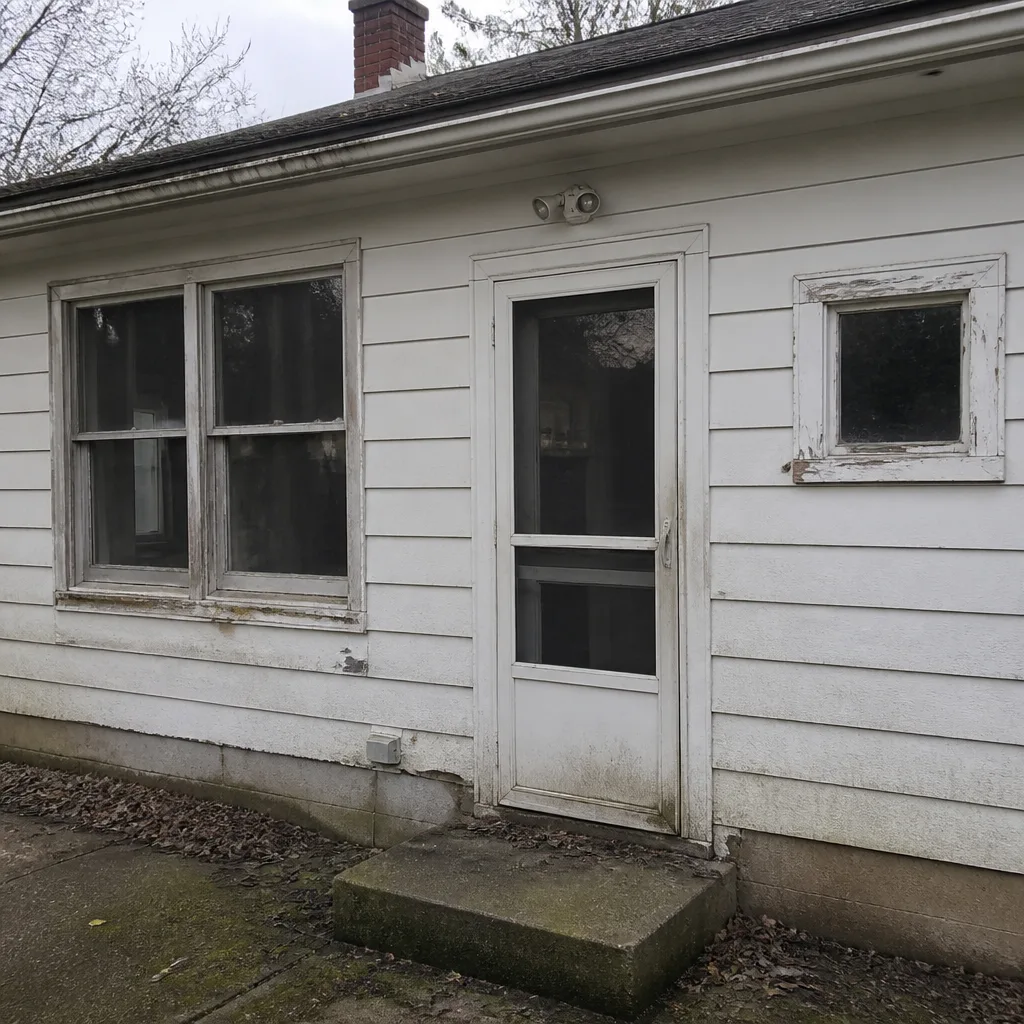 Before
 After
After Before
 After
After Before
 After
AfterYes, Energy-Efficient Windows Save Money in Columbus - But Not the Way Most Ads Claim
Energy-efficient windows do save money over time, but the real question is how much and how fast. For most Columbus homeowners, the answer depends on what’s currently in the openings: houses with original single-pane wood windows see measurable payback, while suburban homes with failed-seal vinyl double-panes save far less than window companies tend to advertise. If you’d rather skip the math and have someone look at your actual windows, call TruePane Windows & Doors at (888) 635-0804.
The Savings Calculation Nobody Puts in the Brochure
Here’s what we tell homeowners who call us asking this exact question: replacing a drafty original single-pane with Double Pane vs Triple Pane Windows in Columbus, OH saves real money, often $125 to $350 per heating season. Replacing a 20-year-old vinyl double-pane that simply has a fogged seal with another double-pane saves far less, sometimes under $60 a year on the utility bill.
Most Columbus suburban homes are in that second scenario, not the first. The post-1990 production-builder boom that packed Dublin, Hilliard, Pickerington, and Gahanna with M/I Homes and Pulte tract builds used entry-level vinyl windows that are now hitting the 25-30 year mark simultaneously. Those windows fail by losing their seal first, not by being inherently inefficient. The frame is still solid. The glass package is still double-pane. What’s gone is the insulating gas between the panes and the clarity of the view.
Dale Kessler, owner of TruePane Windows & Doors, grew up in Clintonville, where his father spent thirty years doing glass work on older homes with original wood frames and single-pane storms that let in half the weather. He learned early that a window’s energy performance has less to do with the glass than with how the whole assembly fits the opening. That’s a lesson he’s carried through nearly three decades of setting windows in central Ohio homes.
Columbus Is Energy Star Zone 5 - and That Changes the Specs
Columbus sits in the Department of Energy’s Zone 5 climate designation. That means the DOE’s savings benchmarks assume specific U-factor and solar heat gain coefficient thresholds tuned for our humid continental swings: January lows near 18°F, July highs near 85°F, and the persistent humidity that repeatedly thermal-cycles every insulated glass unit in the region.
What that means practically: a replacement window that doesn’t meet Zone 5 U-factor and SHGC specs may show negligible energy savings even if it looks like an upgrade from the outside. We’ve seen homeowners buy windows rated for Zone 3 because they were cheaper per unit, then wonder why their heating bill didn’t move. The label matters as much as the glass.
Here’s what the Department of Energy’s Zone 5 thresholds look like, compared to what we typically spec for Columbus homes:
| Spec | DOE Zone 5 Recommendation | What We Recommend for Columbus |
|---|---|---|
| U-Factor | 0.30 or lower | 0.27 or lower for north- and west-facing openings |
| Solar Heat Gain Coefficient | 0.40 or lower | 0.35 or lower where afternoon sun is relentless |
| Air Leakage | 0.30 cfm/ft² or lower | We measure every opening twice before ordering |
| Visible Transmittance | No federal benchmark | 0.50 or higher, depending on the room |
The reason we tighten the spec on north and west sides is simple: Columbus’s flat terrain channels sustained northwest winds that disproportionately stress those orientations. We see more seal failures and weatherstripping wear on the north and west walls of a house than anywhere else. Orientation is a real diagnostic factor here, and it’s something a national window company’s spec sheet never accounts for.
Air Infiltration Is the Real Energy Story - Not the Glass R-Value
The biggest energy savings in Columbus come from eliminating air infiltration, not from upgrading the R-value of the glass itself. A properly flashed, properly set window eliminates the drafts that drive heating bills up during our January nights. Installation quality matters as much as the glass spec printed on the sticker.
Here’s what that looks like in the field. A window with a great U-factor that’s set out of square, shimmed incorrectly, or flashed without lapping the housewrap in the right sequence will leak air around the frame. That leakage often offsets whatever marginal efficiency the glass package provides. A poorly installed Low-E unit underperforms a properly installed standard unit. We’ve had to pull out windows set by other crews where you could feel the north wind coming through the trim gap in February.
Our technicians measure every opening twice and use manufacturer-grade flashing and installation methods on every job. That’s not a sales line; it’s the only way a window performs to its rated spec. Dale’s rule on the whiteboard in the shop says it plainly: if the pane is not true, the job is not done.
What Homeowners Actually See in Their Utility Bills
The savings numbers vary sharply by housing stock, and Columbus splits more dramatically than most cities. Dense pre-WWII neighborhoods like Clintonville, German Village, Olde Towne East, and Franklinton have original or early-generation wood double-hungs, often with rope-and-pulley weight systems and no weatherstripping at all. Those houses show the largest measurable heating-season savings on replacement, frequently $300 to $500 a year once the openings are properly flashed and sealed.
Original wood double-hungs in Clintonville and Franklinton show the most dramatic improvement because the entire assembly is working against the house. The weight pockets behind the sash act like open channels to the outside. The sashes rattle in the wind. There’s no interlock at the meeting rail to stop air from moving through. Replace that with Double & Triple Pane Windows and the difference is immediate and measurable.
By contrast, a 2005 suburban colonial in Hilliard with builder-grade vinyl windows that have fogged seals typically sees more modest savings, closer to $60 to $120 a year on heating and cooling combined. The frame is still intact, the weatherstripping is still doing its job, and the house already has modern insulation. What the homeowner gains is a clear view, a working sash, and a unit that doesn’t have condensation between the panes every cold morning.
That’s still a legitimate reason to replace. But it’s not the $500-a-year story window advertisers lead with.
Common Columbus Window Scenarios We See
After nearly three decades of working central Ohio homes, our staff can usually predict what’s going on before we even ring the doorbell. Here are the scenarios we run into most often, and what each one means for the savings question.
- Original wood double-hungs in Clintonville or German Village: Highest savings potential. These openings often need full frame replacement, not inserts, because the original jamb and weight pocket are part of the air leakage problem. Expect the biggest utility bill improvement here.
- 1985-2010 production-builder vinyl in Dublin, Hilliard, or Gahanna: Failed seals, fogged glass, sashes that stick in the humidity. Savings are modest unless air is actually moving through the opening. The upgrade is more about function and appearance than energy.
- North- and west-facing openings anywhere in Columbus: These windows take the brunt of sustained northwest winds and afternoon sun. They fail first and often, and they’re the ones where a proper flashing job makes the most difference on the bill.
- German Village or historic district properties: The German Village Commission routinely denies standard vinyl double-hung replacements, requiring wood or aluminum-clad wood units that match the original divided-light pattern and sash profile. A homeowner who orders windows without commission approval ends up with units they can’t install. We pull that approval before we order product, which saves time and money and keeps the job moving.
Does the Math Work If You Plan to Stay in the House?
For a homeowner who plans to stay in the house for ten or more years, energy-efficient windows generally do pay for themselves in Columbus, especially if the existing windows are original wood single-panes or early-generation vinyl with visible gaps and drafts. The payback period typically runs 8 to 15 years on the energy savings alone, shorter when you factor in reduced HVAC strain and fewer seal-failure repair cycles.
But the honest answer is that windows are rarely a pure energy-return investment. The return comes bundled: a quieter house, windows that open and close properly, better temperature consistency from room to room, and no more condensation between the panes in January. For the 55-to-75 homeowner who’s been in the same house for twenty years and plans to stay, those are real benefits, the kind you notice every day. The utility savings are the cherry on top.
If you’re budgeting for the work, ask any contractor to put the U-factor, SHGC, and air leakage numbers on the quote, not just the brand name and glass package. At TruePane, we quote manufacturer lines side by side on paper, including Energy-Efficient Windows from Andersen, Pella, Marvin, and Milgard, so the homeowner sees exactly what they’re buying before they commit.
What the Installation Guarantee Has to Do With Your Savings Calculation
Every utility estimate for window replacement assumes the unit is installed correctly. That’s a bigger assumption than most homeowners realize. A window set slightly out of square, flashed with the wrong sequence, or shimmed where it shouldn’t be will underperform its spec. The savings number in the brochure never accounts for sloppy installation because it can’t.
Our answer to that problem is simple: we stand behind the installation. The Done Right Promise means any air infiltration or seal failure visible within 90 days of installation is corrected at no charge - no paperwork, no arguing. And The Keystone Standard means both manufacturer warranty layers get registered in writing, with durations stated, before our truck leaves your driveway. If the pane is not true, the job is not done, and we’re the ones coming back to make it right.
That’s not marketing language. That’s how a second-generation glazier runs a window company in Columbus. Dale learned the trade at Columbus State Community College’s building trades program, spent years on rough framing and glazing on older homes, and built TruePane on the principle that out-of-true installs and voided warranties were problems worth fixing permanently. A window that fits right shouldn’t need caulk to do the work the frame was supposed to do.
FAQs
Yes, but the amount depends heavily on what’s currently in your openings - Columbus homes with original wood single-pane windows typically save $300 to $500 per heating season after replacement, while suburban homes with failed-seal vinyl double-panes often save under $120 a year because the frame is still intact and the house is already insulated.
For a Columbus homeowner replacing original single-pane wood windows, the payback period on energy savings alone typically runs 8 to 15 years, shorter when you factor in reduced HVAC strain and eliminated seal-repair cycles - but if your current windows are double-pane with failed seals, the payback takes considerably longer and the upgrade is more about function and clarity than utility savings. Call (888) 635-0804 if you want an honest assessment of your specific openings.
Generally no - big-box windows often carry U-factors and SHGC ratings below what the DOE recommends for Energy Star Zone 5, which includes Columbus, meaning a window that looks like an upgrade can deliver negligible savings once it’s installed, especially on north- and west-facing walls that take sustained northwest winds.
Yes, absolutely - a poorly flashed or out-of-square installation lets air move around the frame, and a badly installed Low-E unit underperforms a properly installed standard double-pane, which is why TruePane measures every opening twice and registers both warranty layers in writing before leaving the driveway.
If you’d rather have it looked at, Energy Efficient Window Installers Near Me in Columbus, OH at TruePane offers a no-pressure assessment. Call (888) 635-0804 and a live person will answer - 24 hours a day, 7 days a week, not a voicemail tree - to schedule a time for us to measure your openings and give you a straight answer on whether replacement makes sense for your house.
Written by Dale Kessler, Owner, TruePane Windows & Doors at TruePane Windows & Doors, serving Columbus, OH.